


Cat Street Photography Guide
Cat Street — the stretch of Upper Lascar Row that runs between Queen's Road Central and Hollywood Road in Sheung Wan — packs more into a few hundred metres than almost anywhere else in Hong Kong. Open shopfronts spill antiques, ceramics, jade, old prints and stray curios onto the pavement; a stone stairway climbs to a monument temple; and the last of the city's hand-painted shop signs still hang overhead. This guide is a shot list for the lane, a note on when to go, and a short section on how to photograph vendors without getting in the way.
📷 At a glance
Best for: street and detail photography, textures, colour, temple interiors.
Time needed: 45–90 minutes for the lane, plus 20–30 minutes for Man Mo Temple.
Tripod: not needed on the lane; a small one helps inside the temple.
Consent: always ask before photographing people.
What to photograph: a Cat Street shot list
The lane rewards a patient eye more than a wide one. Nearly everything worth shooting here is a close-up or a mid-shot, so leave the long lens at home and bring something in the 35–50mm range.
| Subject | Where | Best light |
|---|---|---|
| Stall contents — ceramics, jade, scrolls, brass, seals, old prints and banknotes | Both sides of Upper Lascar Row | Soft, even daylight; overcast is ideal to kill glare on glazed and varnished surfaces |
| The lane itself, compressed by awnings, hanging goods and shopfronts | Mid-lane, looking uphill toward Hollywood Road | Diffuse light; midday if you want shadow pooled under the awnings |
| Stone steps and the narrow connectors | Ladder Street and the side stairs that link the lane to Hollywood Road | Early, if you want long shadows raking across the stone |
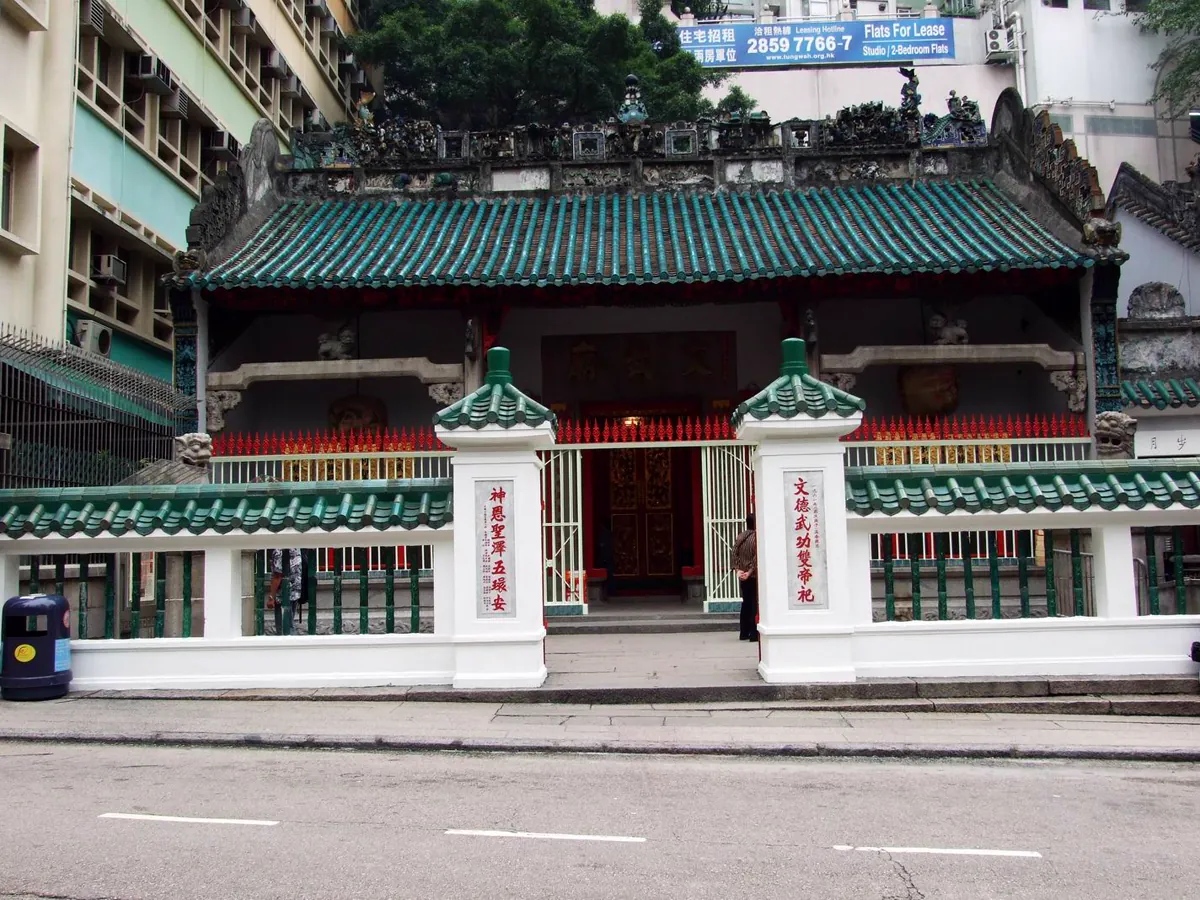
| Man Mo Temple interior | A two-to-three-minute walk up Hollywood Road | Whenever it is open; the inside is dim, so a fast lens or a higher ISO helps |
| Man Mo Temple detail — ceramic figurines, granite and wood carvings, plastered mouldings and murals | Same | Available light; switch off direct flash |
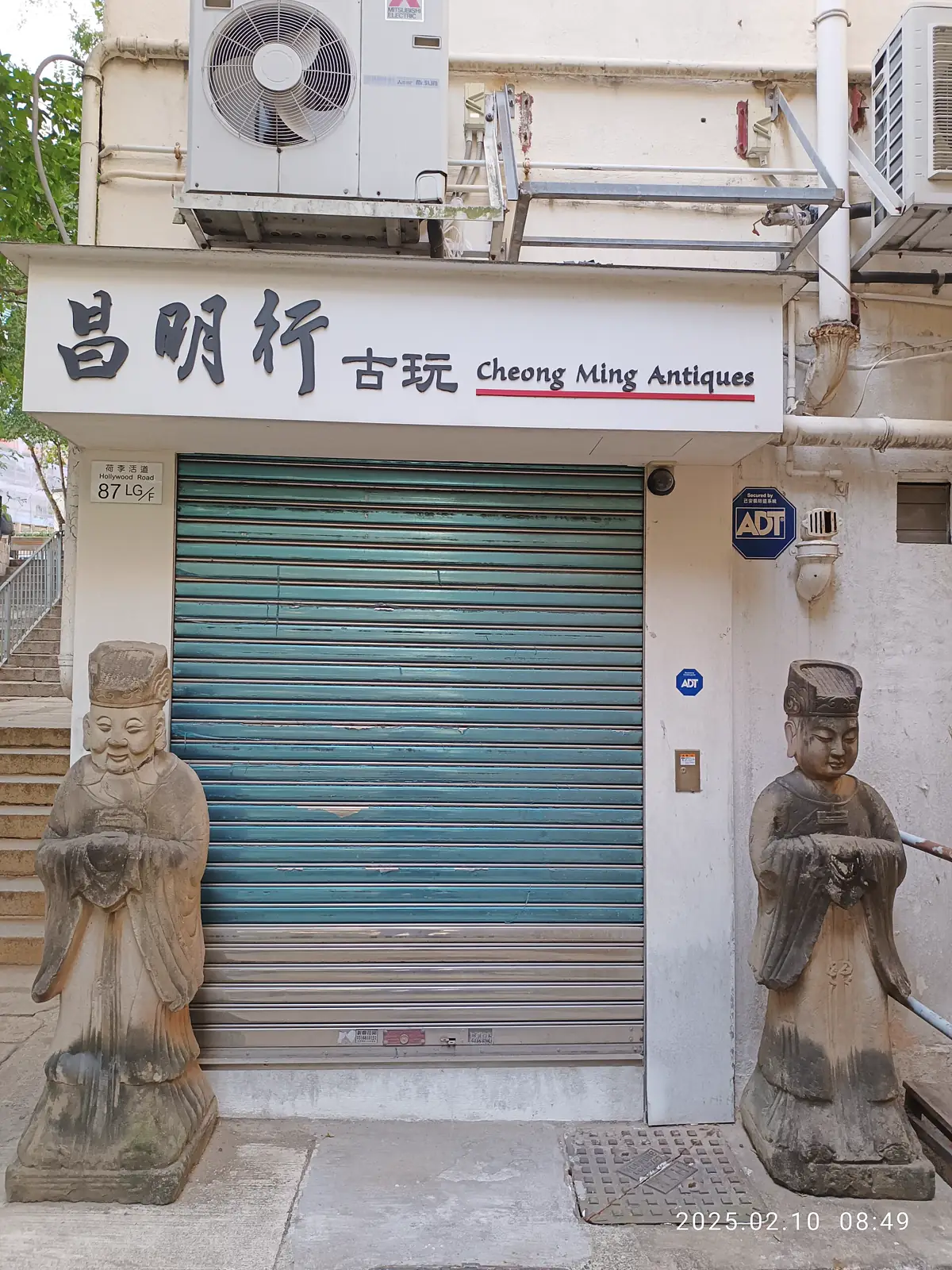
| Hand-painted signage, calligraphy and old shop boards | Along the lane and on Hollywood Road | Soft daylight; angle yourself to avoid reflections |
When to go
The market is a street of shops and stalls rather than a gated venue, so the practical question is when the frontages are open and the light is kind.
- Stalls and shops typically open in the late morning and close by the late afternoon. Because no official trading timetable is published, treat this as a pattern rather than a clock time — see our Cat Street opening hours page for the fullest picture.
- Weekday mornings are the quietest if you want the lane to yourself, and the easiest time to photograph empty frontages.
- Overcast days are not a problem — they are an advantage. Flat light cuts the glare that plagues glass, porcelain and lacquer, and flattens the lane's confusing mix of shade and sun.
- Inside Man Mo Temple, the hours are customarily given as 08:00–18:00 daily, extending to 07:00–18:00 on the 1st and 15th of the lunar month and on festival days. Those are the busiest days for incense and worshippers, and the most atmospheric.
- Check the sun before you go. The Hong Kong Observatory publishes daily sunrise and sunset times, which are worth a look if you plan to shoot the steps or the lane at the edges of the day.
Composition notes for a narrow street
- Look up. The lane's best frames are often above eye level: awnings, signboards, drying laundry, air-conditioners, cables and the sliver of sky between the buildings.
- Look down. Pavement, thresholds, step edges and door sills carry the wear and texture that tell the street's age.
- Shoot details, not vistas. A single carved seal, a row of chopsticks, a maker's mark on the base of a bowl will say more about Cat Street than the whole lane shot from the corner.
- Wait for a passer-by. One figure walking through the frame gives the lane scale and a sense of motion.
- Keep it tight. Wide lenses bend the narrow frontages and pull in the clutter; a normal focal length keeps the jumble readable.
Man Mo Temple: the monument two minutes uphill
Walk to the top of the lane and up Hollywood Road and you reach the Man Mo Temple Compound, the most rewarding single subject near Cat Street. Built between 1847 and 1862 by wealthy Chinese merchants, the compound comprises three blocks — Man Mo Temple itself, Lit Shing Kung and Kung Sor — and was declared a monument in 2010. Its care has been entrusted to Tung Wah Hospital under the Man Mo Temple Ordinance of 1908.
Officially documented photographic subjects inside the compound include ceramic figurines, granite and wood carvings, plastered mouldings and murals. The interior is dark and the good detail work sits low and high on the walls, so brace against a pillar, open up the aperture, and let the light do the rest. There is more on how the lane and the temple connect on our Cat Street and Man Mo Temple guide.
Photographing vendors and their stalls
The stalls are people's livelihoods, not a set. The following is etiquette, not a set of rules — there is no permit system for shooting on the street:
- Ask before you photograph a person. A gesture at the camera and a smile is usually enough; most stallholders are relaxed about it, and some enjoy it.
- Buying something often opens the door. If you want a portrait of a stallholder, browsing first — and buying a small item — is the courteous way in.
- Be careful with the surroundings. Avoid framing customers, price lists, paperwork or children without consent.
- If someone says no, stop. Put the camera down, thank them, and move on. A good photo is never worth a bad exchange.
- Ask before you move an object. Goods are often arranged deliberately; rearranging a stall for a better shot is not yours to do.
Getting there and around
Cat Street sits between Queen's Road Central and Hollywood Road; the nearest MTR station is Sheung Wan (Island Line), about a 7–8 minute uphill walk to Upper Lascar Row. Full directions are on our how to get to Cat Street page, and the street's history is told on our Cat Street history page. If you have more time, the lane is the best starting point for the wider Sheung Wan sights.
Gallery
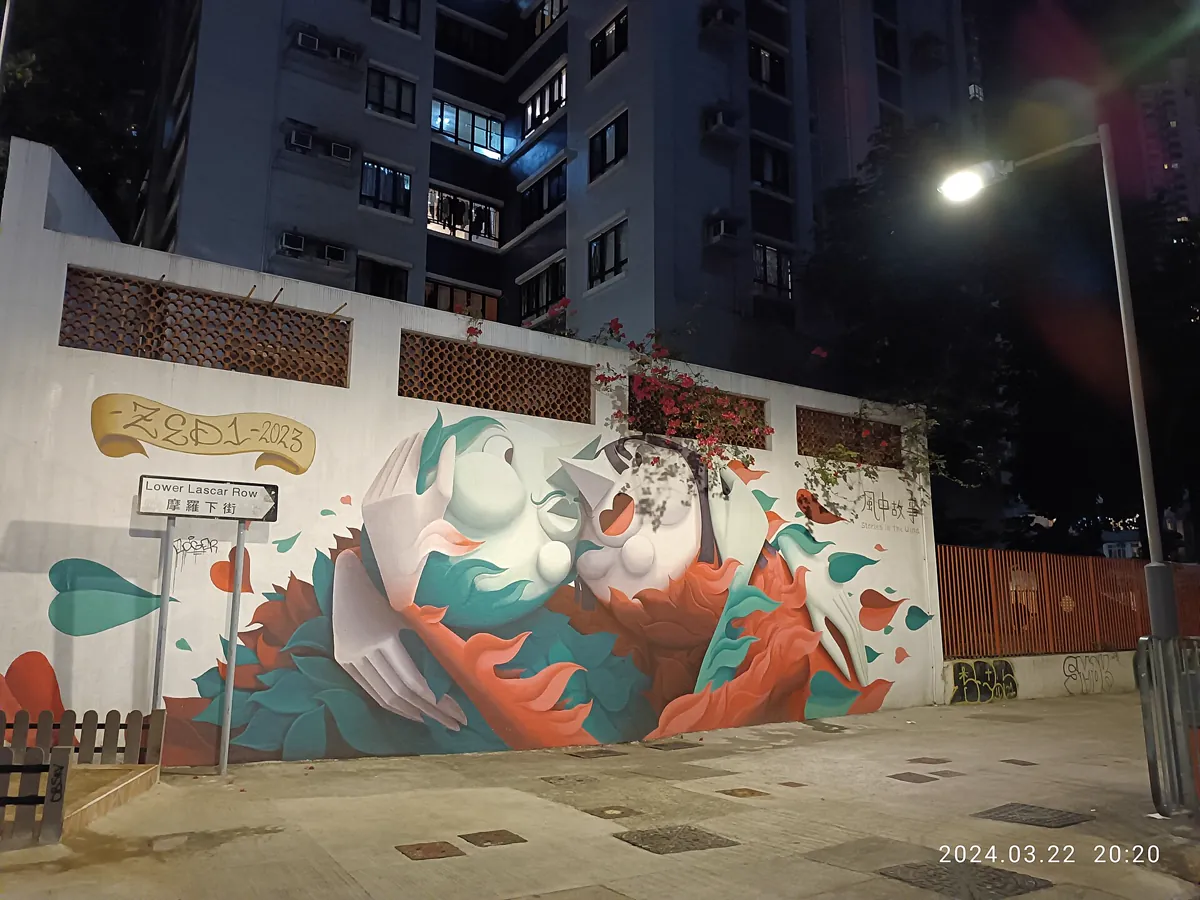
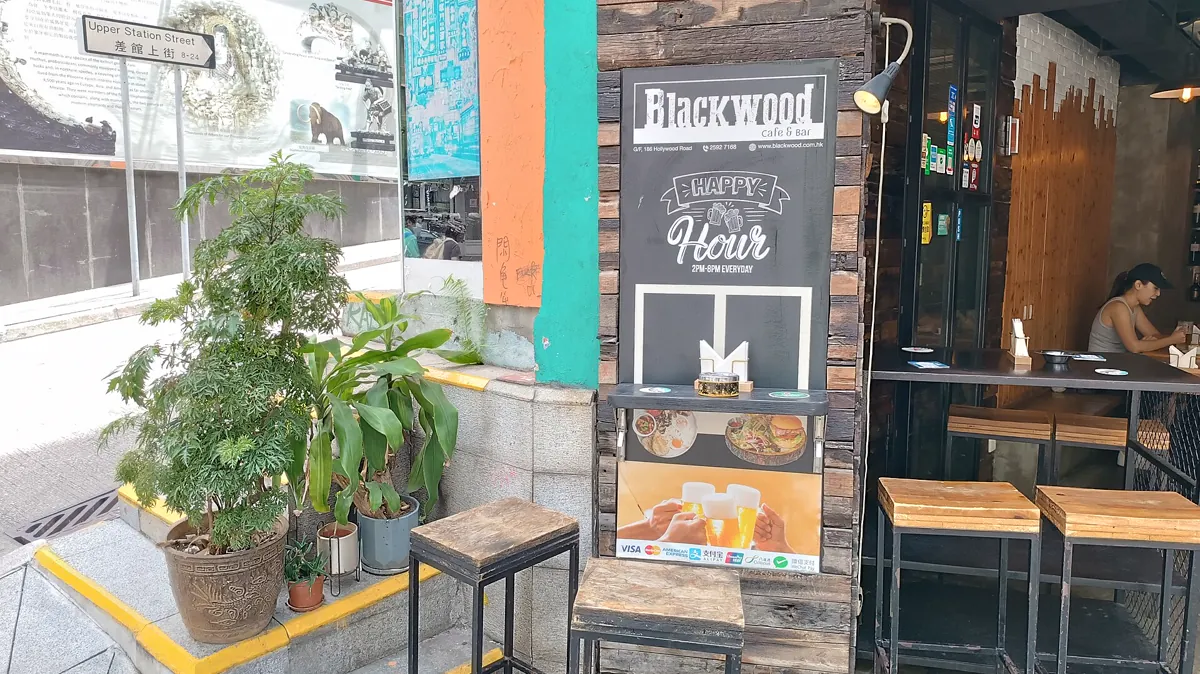
A sense of what is in front of you. Photographs below are from Wikimedia Commons (CC0 or public domain); credit is given with each caption.
📷 If you only do one thing
Walk the lane once without the camera, then come back at the quietest part of the morning and shoot the details — the goods, the signage, the stone — before you climb the hill to the temple.